Artists / Selling & Storefronts
What Your Storefront Says Before Anyone Reads a Word
Visitors judge your storefront as a grid before they read a word. How to make it consistent, what to have in place and how to audit it with fresh eyes.
In short: When you work out how to set up an online art shop, start with what a visitor sees before reading a word: the whole grid of product images at once. Use the same framing, lighting, background and image shape for every piece, so the shop reads as one artist’s considered body of work. Then look at it the way a stranger would, as a grid, and fix whatever breaks that first impression.
A visitor decides whether to keep looking at your storefront before they have consciously read anything on it. They go on the overall visual impression: how consistent the product photography looks, whether the pieces feel like they belong together, whether the whole thing reads as considered or thrown together in a hurry. That judgment happens almost instantly, and it happens before your artist statement gets any chance to make its case.
This guide covers the visual side of setting up an online art shop: what visitors notice first, how to make a storefront consistent, what to have in place before launch and how to audit the result with fresh eyes.
What does a visitor notice first in an online art shop?
The grid. You experience your own storefront one product at a time, adding pieces as they are ready. Visitors do not. They see every thumbnail at once, and that first impression forms before they have engaged with any individual piece.
What they register in that moment is mostly pattern, not detail:
- Whether the images share a shape, so the grid lines up cleanly.
- Whether the backgrounds and lighting look like they came from the same place.
- Whether the pieces feel like one artist’s work or a collection of unrelated experiments.
- Whether anything looks unfinished, cropped badly or out of place.
None of this needs words to land, which is why it does more work than any single piece of writing on the page.
A storefront is judged as a grid, all at once, long before anyone reads about a single piece on it.
How do you make an online art shop look consistent?
Consistency does more work here than any individual piece of writing ever could. A storefront where every mockup uses the same framing, the same lighting logic and a coherent visual thread reads as a considered body of work, even if the designs themselves vary in style. A storefront that mixes wildly different presentation styles reads as unfinished or careless, even when every piece on it is strong on its own merits.
The most mechanical part of consistency is image shape. Shopify’s help center, describing product media for online stores, notes that to make images display at the same size, you need to use a consistent aspect ratio. The same logic applies to any grid of products, wherever your shop lives. A practical setup order:
- Pick one image shape (square is the simplest) and use it for every main product image.
- Pick one background treatment: the same plain color, the same surface or the same setting.
- Pick one lighting logic, so shadows fall the same way and colors look comparable from piece to piece.
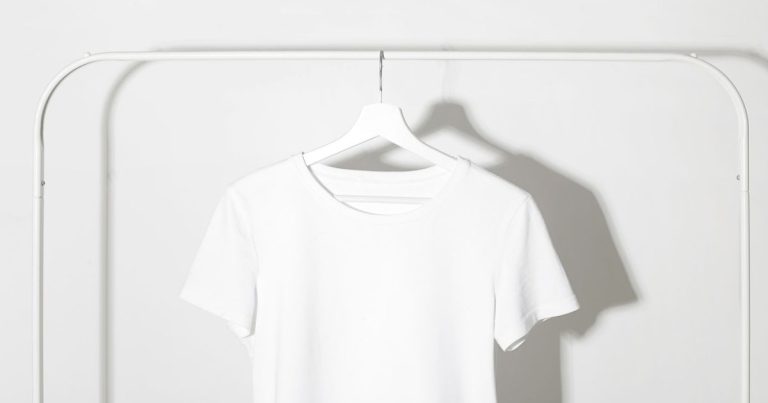
- Pick one mockup style and keep it. An honest mockup shows the design at its real size on a real garment shape.
- Use one naming pattern for titles, so the text under each thumbnail looks as ordered as the images above it.
What should an online art shop have before it launches?
Images carry the first impression, but a visitor who stays will look for a few more things. The table summarizes what each element does and a quick way to test it.
| Element | What it does for a visitor | Quick test |
|---|---|---|
| Product images | Forms the first impression of the whole shop | Do they share a shape, background and lighting? |
| Shop or studio name | Tells people whose work this is | Is it the same everywhere you post? |
| Short bio | Explains who you are in a sentence or two | Would a stranger know what you make after reading it? |
| Artist statement | Gives the work context and a reason to care | Is it specific to your work, not generic? |
| Clear product details | Answers price, size and shipping questions before checkout | Can a buyer decide without writing to you? |
If the statement is the piece you keep putting off, how to write an artist statement for your online shop walks through it. On HollaJack, some of the product details are handled for you: every piece is made to order, so you hold no inventory, and each product page shows the current and next price before purchase.
How do you run a stranger’s audit on your storefront?
It is worth periodically looking at your whole storefront the way a total stranger would: as a grid, all at once, rather than piece by piece the way you experience it while building it out. A storefront is judged as a grid long before anyone reads about a single piece on it. A few things to check during that audit:
- Do all the mockups share consistent framing, lighting and background treatment?
- Does the grid, viewed all at once, look like one artist’s considered collection?
- Is there any piece that clashes hard enough to break the overall impression?
- Does the grid look as considered on a phone as it does on a laptop?
That single audit tends to surface more actionable fixes than any amount of individual product-page tweaking, because it catches the thing visitors judge you on first: the whole, not any one part of it. Browsing other independent artists’ storefronts with the same questions is good practice, since it is easier to see a pattern in someone else’s grid than in your own.
How often should you review your online art shop?
Each time you add a piece, and properly every few drops. A new design photographed in a different light or a mockup made in a hurry is the most common way a consistent shop drifts. Keep the setup choices from above written down, use them for every new listing, and run the stranger’s audit again whenever the grid changes noticeably.
Frequently asked questions
How do I set up an online art shop that looks professional?
Use the same image shape, background, lighting and mockup style for every product, so the grid reads as one body of work. Then review the whole storefront at once, the way a stranger sees it, and fix anything that breaks the pattern.
What image size or shape should I use for my art shop?
Pick one aspect ratio and keep it for every main product image, because a consistent aspect ratio is what makes images display at the same size in a grid. Square is the simplest choice.
What is a stranger’s audit?
It is a review of your whole storefront viewed as a grid, all at once, the way a first-time visitor sees it. You check that the images look consistent and that no single piece breaks the overall impression.
Do I need inventory to open an online art shop?
Not on a made-to-order platform. On HollaJack, every t-shirt and canvas print is made after it is ordered and shipped direct, so artists hold no stock.
If you are ready to put a storefront together, you can become a HollaJack artist and offer your designs as numbered editions.