Artists / Social Media & Audience
Instagram for Artists: What to Post Before You Have a Shop
Six kinds of post that build an audience before your shop opens, plus how to set up a profile and how often to post.
In short: Before the shop exists, Instagram for artists is about proof of the work: finished pieces, process steps, close details and the ideas behind them. Set up a clear profile, keep a rhythm you can hold for months and reply to everyone who comments. When the shop opens, the people who already know your work hear first.
The shop does not have to exist for the audience to start. People follow artists on Instagram for the work and the way the artist talks about it, long before there is anything to buy. Waiting for a shop before you begin posting only delays the audience.
This guide covers the profile, what to post when there is nothing to sell, how often to post and how to prepare followers for opening day. It names no tactics that depend on how any app sorts its feed, because those change. The habits below do not.
What should an artist’s Instagram profile say before there is a shop?
Treat the profile as a short introduction, since it is often the first and only thing a visitor reads.
- Name and handle. Use the name you plan to use everywhere, so people can find you again later.
- One line about the work. Say what you make in plain words, such as “ink drawings of city birds.” A job title does not help a stranger.
- A clear image. A crop of your work or your mark works well. You do not need a portrait.
- One link. Point it somewhere that exists, even if it is a simple page. A link that says “shop coming soon” for months only teaches people to ignore it.
- Three pinned or featured pieces. Choose the three that best show what you do.
Your bio is a landing page goes further on writing that line, and how to write an artist statement for your online shop helps with the longer version.
What do you post when there is nothing to sell yet?
Post anything that helps someone understand the work. Aim for a mix across a week rather than a single theme in every post. Six kinds of post cover almost everything:
| Post type | What it shows | A caption to start from | Effort |
|---|---|---|---|
| Finished work | A piece, photographed clearly in good light | “This one took three tries. Here is the one I kept.” | Medium |
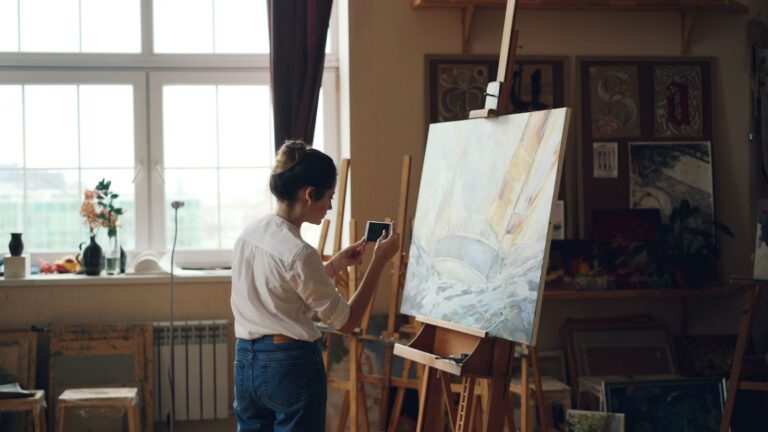
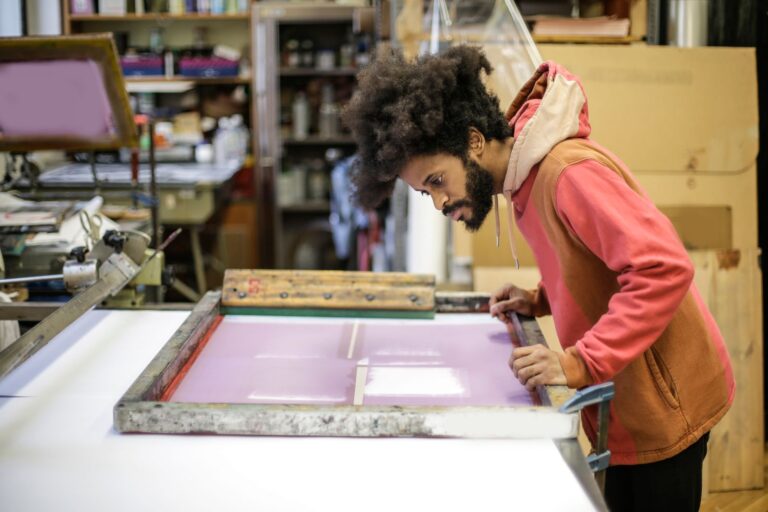
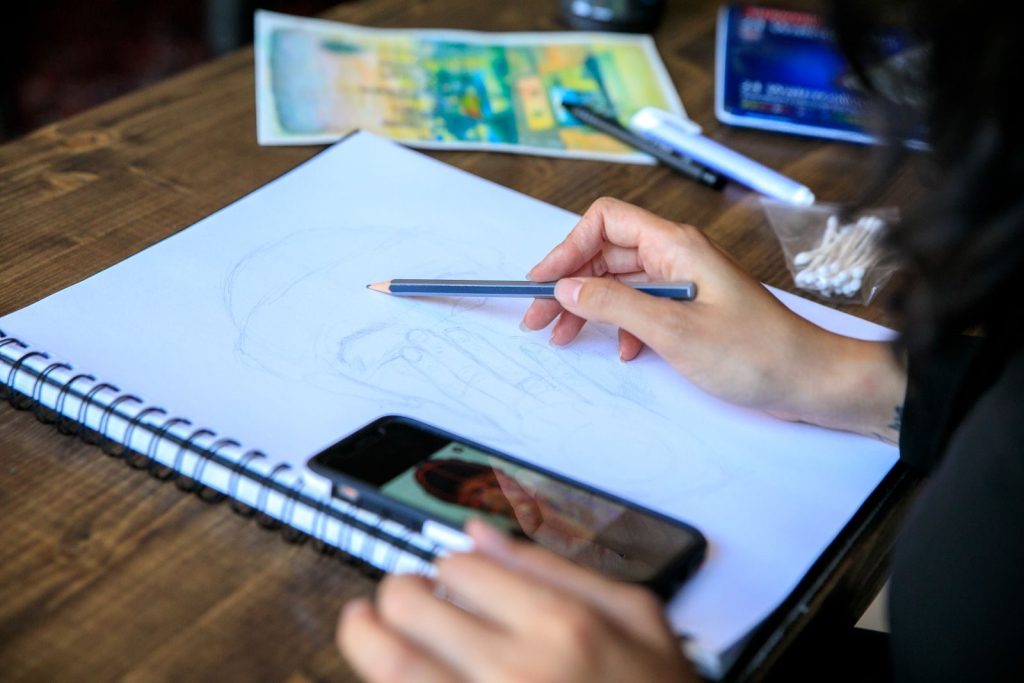
| Process | A sketch, a half-finished stage, a messy desk | “Where this started, and where it went.” | Low |
| Detail | A close crop of a line, texture or corner | “The part nobody asks about, but I like best.” | Low |
| The idea | The thought behind a piece, in a few sentences | “I started this after watching…” | Medium |
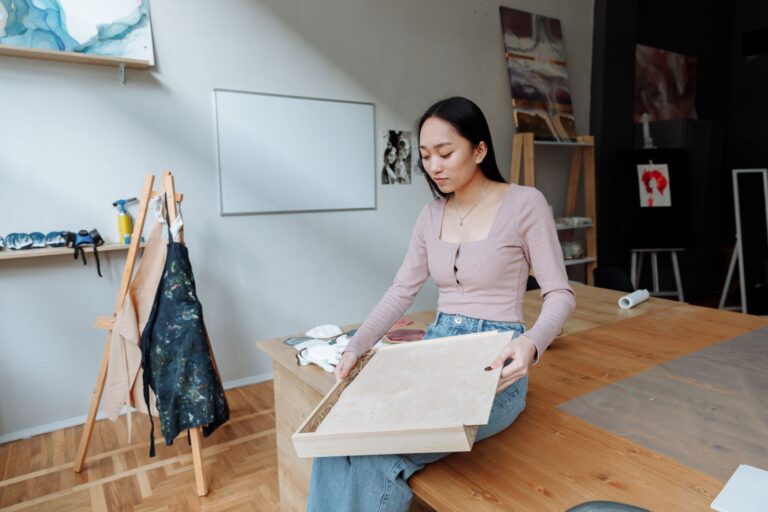
| Tools and place | Your pens, shelf, window light or a corner of the desk | “The pens I keep reaching for.” | Low |
| A question | Two options for a color or a title | “Which of these two? I cannot decide.” | Low |
Questions are underrated. They give people an easy way to speak, and they give you real information about what looks right. Reply to every answer. Replies are how followers become people who know you, and they take less time than another post.
How often should you post?
As often as you can keep up for months. Two or three posts a week is a workable rhythm for many people, and one a week is better than three in a burst followed by silence. The size of the number matters less than the fact that you keep to it. Posting consistently beats posting perfectly makes that case in more detail.
To make a rhythm easier, shoot your photos in one sitting, write captions in another, and schedule or queue them for the week. A few minutes of steady work usually beats waiting for an inspired hour.
How do you prepare followers for the shop?
Do it gradually, over about a month, so the announcement is not a surprise. One way to space it out:
- Four weeks out: say you are working on a first design, and show the sketch.
- Three weeks out: post two color options and ask which works better.
- Two weeks out: share the idea behind the piece and who it is for.
- The final week: give the date and say where the shop will live.
When you are ready to plan the launch itself, your first art drop: a 14-day launch checklist takes over from here.
There is no need to wait until you have stock, either. On HollaJack there is no inventory and no upfront cost, and each artist gets a storefront page with their name on every piece. That lets the shop follow the audience instead of the other way round. The page on how to become a HollaJack artist covers the steps, and how to sell your art on t-shirts without inventory explains the model.
Keep a simple note of people who ask to be told when the shop opens. An app can change how it shows your posts. A short list of people who asked is something you hold yourself.
What should you leave out?
- Posts that only announce. If every post asks for something, people stop reading them.
- Blurry or dim photographs of finished work. Two minutes by a window beats an hour of editing.
- Bought followers. An audience that does not engage cannot become a buying audience. The FTC’s 2024 rule on fake reviews also prohibits buying fake followers or views to misrepresent your influence for a commercial purpose, when you knew or should have known they were fake.
- Complaints about other artists. They are easy to write and hard to take back.
- Pressure. No countdowns, no “last chance,” nothing that works by making people anxious.
Once people start asking how to buy, turning followers into people who actually buy covers the next stage.
Frequently asked questions
What should an artist post on Instagram?
Mix finished pieces, steps of your process, close-ups of detail and short notes on the idea behind a piece. Show the work clearly and say something specific about it.
How often should an artist post on Instagram?
Pick a pace you could hold for several months without strain. For many artists that means two or three posts a week, but a steady single post each week is a perfectly good start.
Do I need a shop before I start posting?
No. Posting first lets people see the work and lets you answer questions in advance. When the shop opens, you already have people to tell.
Should I make a separate Instagram account for my art?
If your personal account is mostly about other things, a separate account keeps the work easy for strangers to understand. Use the name you plan to sell under, so nothing has to change when the shop opens.