How to Write an Artist Statement for Your Online Shop
Write a short, specific artist statement for your shop in three parts, with a fictional example and a table of plain-language rewrites.
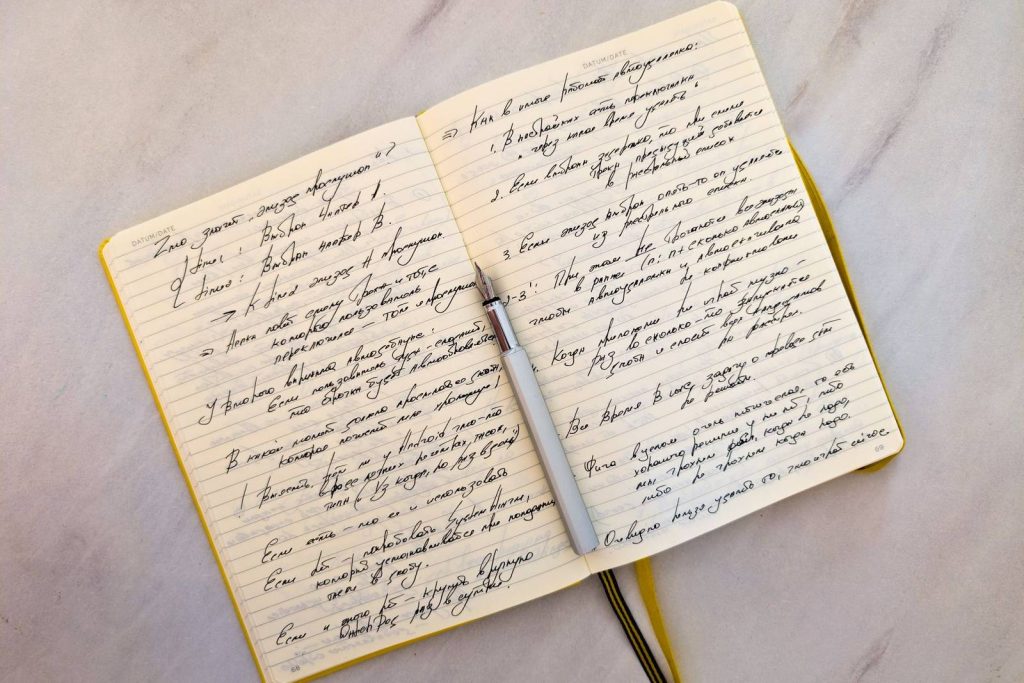
In short: A good artist statement for an online shop is short, specific and written for a stranger. In 60 to 150 words, say what you make, how you make it and what keeps you coming back to it, with one concrete detail. Cut phrases that could describe any artist, and claim only what is true of how each piece is made.
Nobody visits an online shop to read an artist statement. They read it when the work has made them curious, and they usually read it quickly, on a phone. At that moment the statement has one job: to turn “I like this” into “I understand who made it and why it looks this way.”
This guide is about the statement that lives on a storefront, not the longer document written for galleries. It is shorter, plainer and closer to what is for sale. It also comes with a fictional example and a table of rewrites you can borrow from.
How is an artist statement different from a bio?
A bio says who you are: where you work, what you have done, perhaps where you studied. A statement says what the work is about: the subjects you return to, the way you make things and the reason you keep going. A bio answers “who is this?” and a statement answers “why does this look like this?”
A shop usually needs both, and they can sit on the same page. If you have not written the bio yet, your bio is a landing page is the place to start. Write the statement afterward, when you know what the page already says.
What should an artist statement for an online shop say?
Answer three questions in plain sentences, one or two sentences each:
- What do you make? Name the subject and the format, not the genre.
- How do you make it? The tools, materials or habits that shape the look.
- What keeps you coming back to it? The honest reason, even if it is modest.
Then add one concrete detail: a place, a material, a routine. The detail is what a stranger remembers. Here is an example, written for an imaginary painter, to show the shape:
I paint small harbor scenes from memory, usually in the hour after I get home from the water. I work in gouache on paper, then redraw the best ones as flat shapes for shirts. I keep returning to boats because their outlines are simple and their reflections never are.
That is three sentences, about fifty words, and every one of them can be checked against the work.
How long should it be, and where does it go?
Between 60 and 150 words is enough for a storefront. A longer statement is fine on an about page for readers who ask for more, but the first screen should work without it.
Keep a one-sentence version, too, for product pages and social profiles. Build it by keeping the subject and the method and dropping the rest. The harbor statement above shrinks to: Harbor scenes painted from memory in gouache, then redrawn as flat shapes for shirts. If the short version no longer sounds like you, the long one probably needs work as well.
On HollaJack, each artist gets a storefront page and a name on every piece. So the statement has to make sense for someone who arrives from a single design and knows nothing else about you. Write it so that a reader who has seen one shirt can understand the rest of the shop.
What your storefront says before anyone reads a word looks at the other signals a visitor takes in first. For the practical side, the become an artist page outlines how selling on HollaJack works.
How do you cut the art-speak?
Art-speak is language that sounds serious and says little. The fix is almost always the same: replace each abstract word with something a reader could point at. The table shows common offenders and example rewrites. All the rewrites are fictional.
| Common phrase | Why it fails | A rewrite (example only) |
|---|---|---|
| “My work explores memory and place.” | It could describe thousands of artists | “I draw the street I grew up on, from photos I took before it changed.” |
| “Bold, vibrant, eclectic designs.” | Adjectives tell the reader nothing they cannot see | “Flat shapes in four colors, outlined in heavy black.” |
| “Inspired by nature.” | Too broad to picture | “I draw the plants that push through cracks near my studio.” |
| “Handcrafted with love.” | Vague, and possibly untrue for a made-to-order piece | “Drawn by hand in ink, made to order when you buy.” |
| “One of a kind.” | Untrue when a design is produced as a run | “Numbered in the order the pieces are bought.” |
| “I’m just a beginner.” | An apology in place of information | “I started drawing animals two years ago and I post each one.” |
The “handcrafted” and “one of a kind” rows matter most for honesty. Say what is true about how a piece is made and what a number means. On HollaJack, the artist makes the art, each piece is made to order after purchase, and each order takes the next number in the run. A statement that matches those facts will not need correcting later.
What is the last check before you publish?
Read it aloud, slowly, and listen for three things.
- Sentences you could not defend. If a friend asked “what do you mean by that?” and you would struggle, rewrite it.
- Words you would never say in conversation. Replace them with the ones you would.
- Anything a stranger would need explained. Add the missing noun, place or material.
Then ask one person who does not know your work to read it and tell you what they now expect the shirts to look like. If their answer matches your art, the statement is doing its job. Keep it near the same voice you use in captions, as write the caption before you design the shirt suggests, so the shop sounds like one person.
Frequently asked questions
How long should an artist statement for an online shop be?
For a storefront, 60 to 150 words covers it. Also keep a single-sentence version for places with less room, such as listings and profiles.
Should an artist statement be in first or third person?
First person is warmer and more common for a shop. Use third person only if the same text also has to work as a press-style bio.
Do I need an artist statement if I only sell t-shirts?
A short one still helps. It tells a buyer why the shirt looks the way it does and who stands behind it.
What if I have nothing to say about my work?
Start by answering three questions in plain sentences: what you make, how you make it and what keeps you coming back. Often a statement is simply those answers, edited.