Artists / Selling & Storefronts
Where to Sell Art Online: The Best Sites, Sorted by What You Want
The best sites to sell art, sorted by what you want: originals, prints without inventory, your own shop or numbered editions, with each platform's own fees.
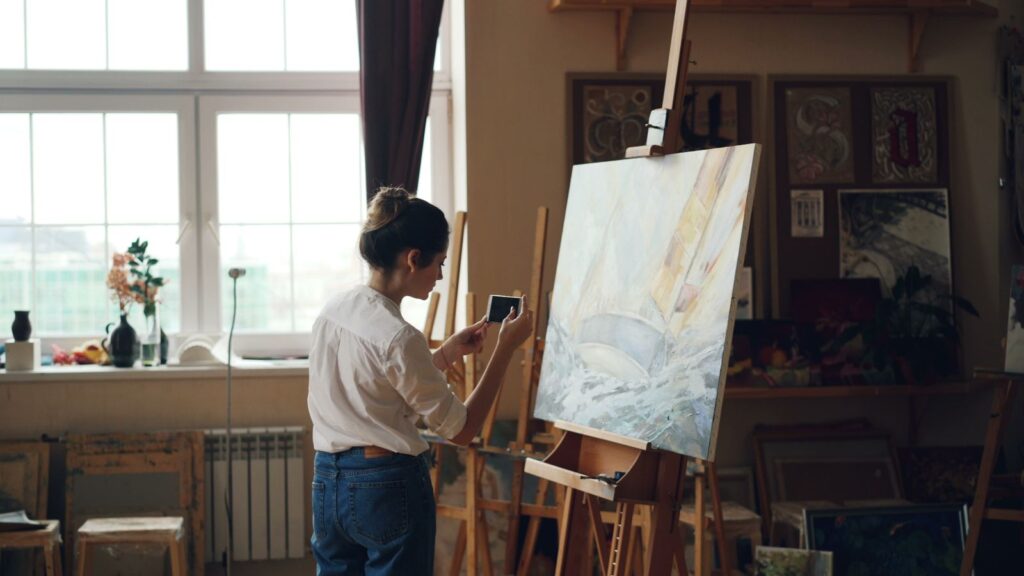
In short: Where to sell art online depends on what you want to sell and how much of the work you want to do yourself. Curated marketplaces such as Saatchi Art and Artfinder suit original pieces, print-on-demand sites such as Society6, Fine Art America and Threadless print and ship for you, and Shopify or Big Cartel give you a shop of your own. Many artists use two: one for reach and one they control.
There is no single best site, because the sites do different jobs. A gallery-style marketplace wants finished originals. A print-on-demand site wants designs it can put on many products. Your own shop needs an audience you bring with you.
This guide sorts the options by what you want, not by one long ranking. HollaJack is one of the options covered, so its section sticks to published facts and says plainly where it does not fit. Fees as listed on each platform’s own pages in November 2026; platforms change their terms, so follow the links before you decide.
Where can I sell my art online?
Where to sell art comes down to five broad routes. Each one answers a different question about stock, price control and who finds the buyer.
- Curated marketplaces for originals. You list one-of-a-kind work, the site brings collectors, and it takes a commission when a piece sells.
- Print-on-demand sites. You upload a design, the site prints it on prints and products after each order, and you earn a set amount or a share.
- Your own shop. You pay a monthly plan, set every price, and do most of the work of bringing people in.
- Social and in person. Instagram, art fairs and galleries, where the relationship with the buyer matters more than the listing.
- Numbered editions on tees and canvas. A made-to-order route where each piece carries an edition number, which is how HollaJack works.
If you are still deciding which income streams to build at all, start with how to make money as an artist, which compares commissions, originals, prints, apparel, teaching and licensing. This guide picks up once you know you want to sell.
Where should you sell original artwork to collectors?
Of the websites to sell art originals, three come up most often, and they work in different ways.
Saatchi Art
Saatchi Art is an online gallery for original work, with prints alongside. It works on commission, taking a share of each sale, and its seller help center sets out the current rate and how packing and shipping are handled.
Artfinder
Artfinder sells original art across mediums, from paintings and drawings to sculpture and photography, and you apply to join rather than simply signing up. Its seller page says it does not currently accept AI-generated work. According to its help article on what it costs to sell on Artfinder, it deducts a 40%, 45% or 50% commission each time an artwork sells, depending on the seller plan you choose, and it does not charge commission on shipping.
Etsy
Etsy is a broad marketplace rather than an art gallery, but many painters, printmakers and illustrators sell there. You usually make, pack and ship each item yourself. Etsy’s fee basics page lists a $0.20 listing fee per listing and a 6.5% transaction fee on the total order amount, which includes shipping and gift wrap if you charge for them, plus payment processing fees.
What are the best sites to sell art prints without inventory?
If you want your work on prints, posters and products without buying stock, print on demand is the route. You upload a file, nothing is produced until someone pays, and the site handles printing and shipping. What changes from site to site is who sets the price and how your share is worked out.
- Redbubble is the best-known name, with a very wide product range and a large existing audience. Its fees depend on your account tier, and our Redbubble alternatives compared page lays out the tiers and markups with links to Redbubble’s own help pages, so we will not repeat them here.
- Society6 leans toward wall art and home decor. Its help article on how much artists earn says Society6 sets the base price, and artists earn 10% on pillows, wall tapestries and some wall art, and 5% on all other products.
- INPRNT is built around art prints, and is a natural fit for illustrators whose work suits paper. Check its help center for the current earnings on each product before you list.
- Fine Art America uses a base price plus your markup. Its own guide to pricing artwork for print on demand explains that the base price covers manufacturing and you are paid your full markup on every sale.
- Threadless Artist Shops give you a storefront where you set your own retail prices. Its help article on how artist earnings work gives the formula as net retail price minus a base fee, which includes a 5% processing fee on the net retail price. Sales through the separate Threadless marketplace earn 10%.
Print on demand removes the money risk, not the work: a listing nobody sees does not sell. For apparel, selling your art on t-shirts without inventory compares the three main ways to do it, and how to make merch from your art covers preparing the files.
How do the platforms compare?
Where we could not confirm a number on the platform’s own page, the table describes the model without one.
| Platform | Best for | What you sell | Who holds stock | Fee or artist cut (as the platform states it) |
|---|---|---|---|---|
| Saatchi Art | Originals for collectors | Original work, plus prints | You keep the original until it sells | A commission on each sale; see its seller help center |
| Artfinder | Originals across mediums | Original art, by application | You | 40%, 45% or 50% commission, by seller plan; none on shipping |
| Etsy | Handmade work with a marketplace audience | Originals, prints, handmade items | Usually you | $0.20 per listing, 6.5% transaction fee, plus payment processing |
| Redbubble | Reach for a large catalog | Designs on many products | Nobody: printed on demand | Depends on account tier; see our comparison page |
| Society6 | Wall art and home decor | Designs on prints and products | Nobody: printed on demand | 10% on pillows, tapestries and some wall art, 5% on other products |
| INPRNT | Illustrators selling prints | Art prints and other formats | Nobody: printed on demand | See its help center for current earnings |
| Fine Art America | Prints with a markup you choose | Prints and print products | Nobody: printed on demand | Base price plus your markup; you keep the full markup |
| Threadless Artist Shops | Your own storefront for apparel and more | Designs on apparel and products | Nobody: printed on demand | Net retail price minus a base fee (includes 5% processing); 10% on marketplace sales |
| Shopify | A full shop you control | Anything you can ship or connect | You, or a print partner you connect | Basic plan $29 a month billed yearly, $39 billed monthly |
| Big Cartel | A small, simple artist shop | Anything you can ship | Usually you | Free Gold plan; Platinum $15 a month, Diamond $30 a month |
| Galleries and fairs | Meeting buyers in person | Originals and prints | You | A gallery commission or a fair booth fee, agreed with the organizer |
| HollaJack | Numbered editions on tees and canvas | Tees, with a matching canvas print | Nobody: made to order | HollaJack keeps a flat $18.00 per tee; everything above it is split 50/50 |
Plan prices are from Shopify’s pricing page and Big Cartel’s pricing page, for US plans.
Should you sell on a marketplace or your own website?
A marketplace lends you its shoppers. People already search Etsy, Saatchi Art or Society6 for art, so a stranger can find your work on day one. In return, the marketplace sets most of the rules, sits between you and the buyer, and puts your listing next to thousands of others.
Your own website reverses that trade. On Shopify, Big Cartel or Squarespace you choose the prices, the layout and the follow-up, and the customer list is yours. But nobody arrives unless you send them, so your own shop works best once you have an audience on social media or an email list. Squarespace sells website plans with online selling included; compare its current plans on Squarespace’s pricing page.
Social selling and local sales fill the gap. Instagram is where many artists build the audience that later buys. Art fairs and galleries let people see a piece’s scale and surface, which matters most for originals. Galleries usually take a commission on what they sell, and fairs usually charge for a booth, so read the agreement before you commit work to either.
Where do numbered editions on tees and canvas fit?
HollaJack is a smaller, specific option: an online gallery where your designs sell as made-to-order t-shirts, each one a numbered edition. Every order takes the next number in the run, written to the buyer’s order and never reissued, and every piece carries a transferable certificate of ownership. Any design can add a matching canvas print, at $40.00, carrying the same edition number.
The pay formula is flat and published. A tee’s price is the garment price plus your art price, and your art price steps up with every edition sold ($0.10 per edition by default). On every tee, HollaJack keeps a flat $18.00, and everything above it is split evenly between you and HollaJack. With the defaults, a Unisex tee sells for $23.00 at N° 001 and you earn $2.50 on it. The earnings formula and calculator shows the numbers at any edition.
Where it does not fit, plainly:
- Shipping is US only: US addresses, US territories and APO/FPO/DPO addresses. If most of your buyers live elsewhere, a site that ships internationally serves them better.
- Tees and canvas only. There are no mugs, stickers or phone cases, and no canvas-only designs yet.
- No originals. If you want to sell a painting itself, use a gallery-style marketplace.
It fits best if you have a design people already respond to and an audience who would value owning a numbered piece. You keep the rights to your artwork and can stop a run at any time. What a numbered edition t-shirt is explains the format in more detail.
How do you choose where to sell your art?
Deciding how to sell your art gets easier when you answer these questions in order.
- Are you selling originals or reproductions? Originals point to Saatchi Art, Artfinder, Etsy or a gallery. Reproductions point to print on demand or your own shop.
- Do you want to hold stock? If not, choose a print-on-demand or made-to-order platform, where nothing is produced until someone pays.
- Do you already have an audience? Without one, start where shoppers already browse. With one, a shop or platform that pays more per piece is worth sending them to.
- How much price control do you need? Some platforms fix your share; others let you set the price or the markup. Run your own numbers with a guide to pricing art prints and apparel.
- Where are your buyers? Check each platform’s shipping area against where your followers live.
Start with one route and a handful of your strongest pieces, then add a second once you see which work moves.
Frequently asked questions
Where is the best place to sell art online?
It depends on what you sell. Curated marketplaces such as Saatchi Art and Artfinder suit originals, print-on-demand sites suit prints and products without inventory, and Shopify or Big Cartel suit artists who already have an audience.
Where should I sell my artwork if I am just starting?
Start where shoppers already browse, such as a marketplace or a print-on-demand site, so strangers can find your work while you build an audience. Move toward your own shop once people come looking for you.
Do I need inventory to sell art online?
No. Print-on-demand and made-to-order platforms produce each piece only after it is paid for. You only hold stock if you sell originals or print a batch yourself.
Can I sell the same art on more than one site?
Many artists do, for example prints on a marketplace and originals from their own shop. Read each platform’s terms first, and remove an original from every listing as soon as it sells.
If numbered editions on tees and canvas suit your work, become a HollaJack artist.